


A Wee (Our)story Lesson…

DST has a quirky origin story. In 1784, Benjamin Franklin jokingly suggested that Parisians could save on candle wax by waking up earlier to take advantage of the morning sunlight. The idea stuck around, and in 1907 British builder William Willett proposed shifting clocks to align with natural light cycles. However, it wasn’t formally adopted until World War I, when Germany implemented DST to save fuel, and the U.S. followed suit in 1918.
Over a Hundred Years Later…
We’re still debating it endlessly. Some studies claim it reduces evening traffic accidents and boosts retail and outdoor activity, while others argue it disrupts sleep cycles, school schedules, and even heart health.
And despite the myth, farmers never wanted DST—in fact, they opposed it because it disrupted their and their livestock’s routines. Regardless of where you stand, our clocks are changing again this weekend. The best way to adapt? Work with your body’s natural rhythms.
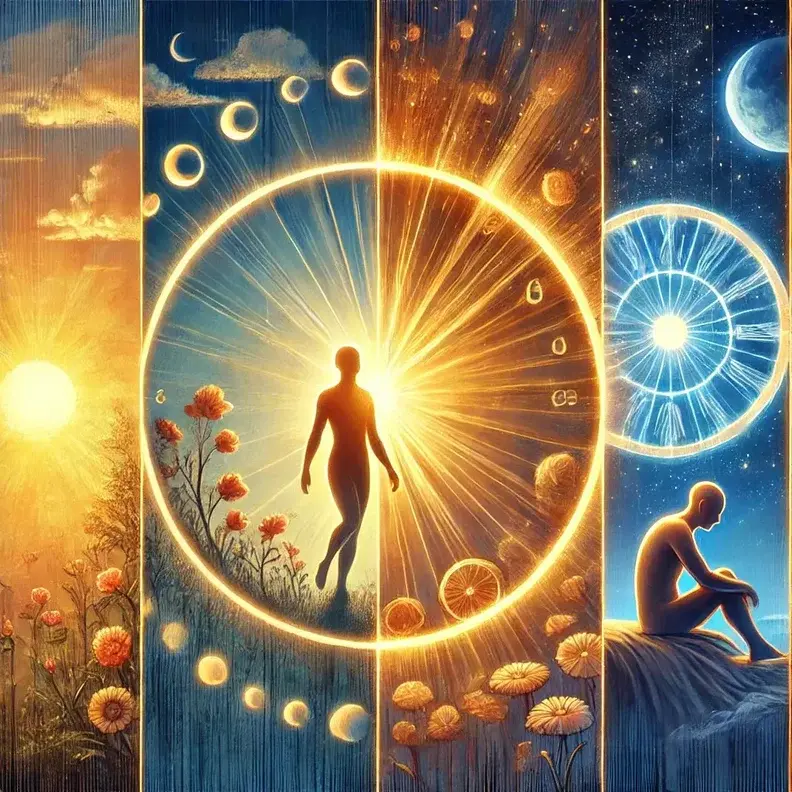
A Few Simple Ways to Adjust
👍 Sunlight is a Go!
Your sleep-wake cycle is regulated by melanopsin-containing retinal cells, which are particularly sensitive to short-wavelength blue visible light from the sun.
The morning light signals your brain’s master clock to suppress melatonin, increase cortisol, and boost alertness. Sunrise exposure (even on cloudy days) helps keep your internal clock aligned and regulates energy levels, metabolism, and mood throughout the day.
At sunset, stepping outside and letting your eyes take in the shift toward red/orange light triggers melatonin production, preparing your body for sleep.
👎 Screens & Artificial Light are a No!
Your sleep-wake cycle is regulated by melanopsin-containing retinal cells, which are particularly sensitive to short-wavelength blue visible light from the sun.
The morning light signals your brain’s master clock to suppress melatonin, increase cortisol, and boost alertness. Sunrise exposure (even on cloudy days) helps keep your internal clock aligned and regulates energy levels, metabolism, and mood throughout the day.
At sunset, stepping outside and letting your eyes take in the shift toward red/orange light triggers melatonin production, preparing your body for sleep.
LED screens (phones, tablets, TVs, and computers) emit a high concentration of blue wavelengths, delaying melatonin production and tricking your brain into thinking it’s still daytime.
Try Night Shift mode, f.lux, or blue-light blocking glasses if screens are unavoidable.
Use warm, dim lighting (like amber bulbs or candlelight) in the evening to mimic natural sunset cues signal to your body that it’s time to wind down (It’s sexier too.)


Comments